Ayruveda + Design
REFLECTION
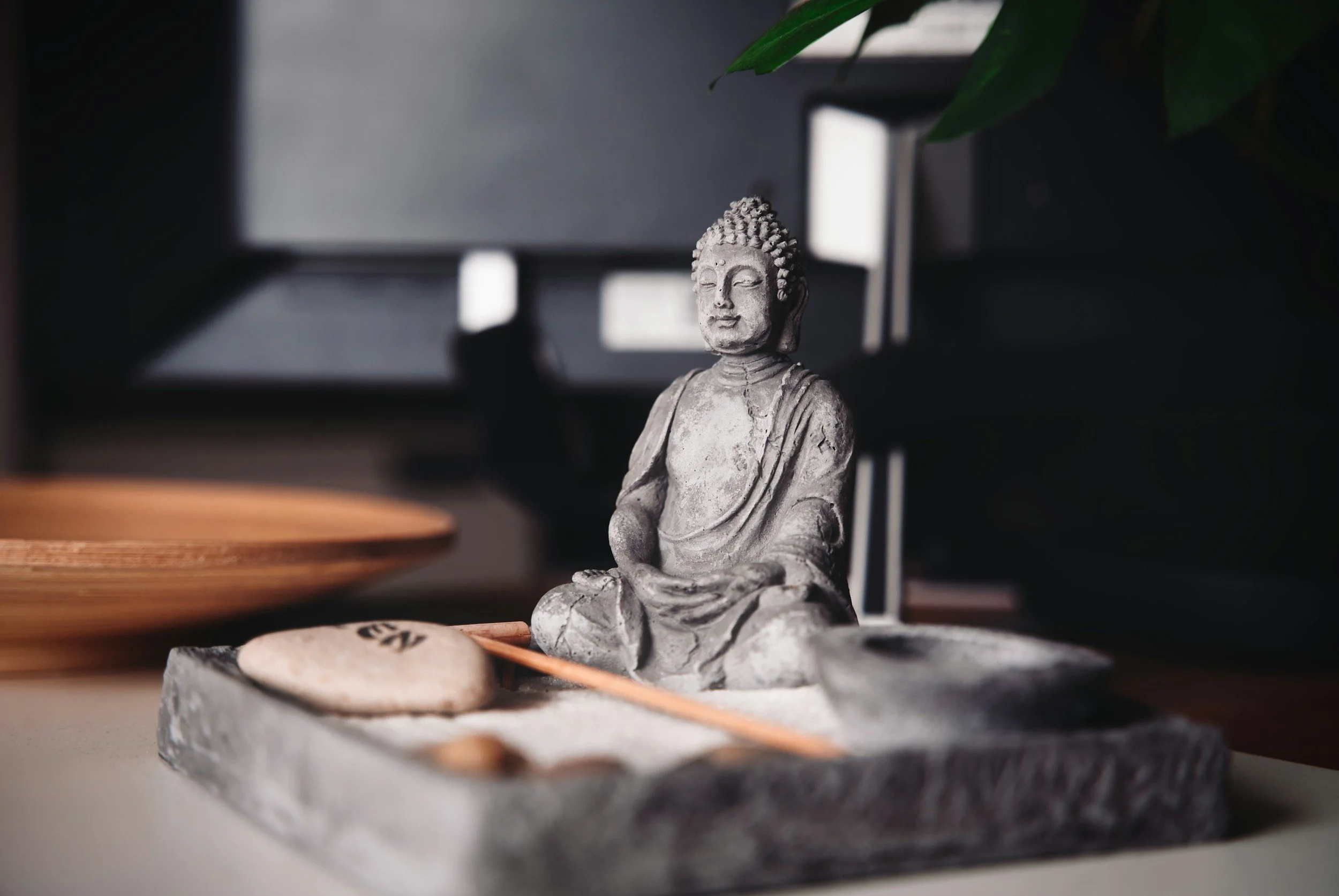
My first exposure to Ayurveda was as a freshman in college. I took a class called Movement & Meditation and one of our textbooks, was Prakruti – Your Ayurvedic Constitution. While it mostly covered topics like “what to eat,” it also explored daily routine, the rituals of life, and how to sleep. I filed this information away and use it here and there.
Ayurveda is an ancient science of our wellbeing; it’s more than 5,000 years old. It recognizes the interconnection between our physical, emotional, and spiritual wellness, with the goal of guiding us toward homeostasis — our natural state of being. Vastu, the Ayurvedic system of Architecture + Design, is a bit like the better-known Feng Shui but with its own guidelines. The principles are meant to promote positive energy, prosperity, and well-being.
Some of the objectives in Vastu that we integrate into our projects are the following:
• The directions carry much influence. North and East are considered auspicious, especially for the main entry of a home. This is easy to accomplish in a new build, but for existing homes you have to work with what you have. If the main entry is not to the north or east, there are accommodations such as placing a mirror opposite the door, displaying the symbol for Om, or using a red doormat to ensure the good fortune of the home.
• For new-build homes, start with a rectangle or square because they carry balanced energy. Site the home along the cardinal lines.
• Remove clutter, especially at the entry and in main living spaces, to create room for new possibilities. In our projects, we often include detailed storage, coordinating with the family’s needs and specific possessions to maximize the space’s potential.
• Maximize natural light in the home. This one has my heart — our projects are known for oversized windows that engage with the outdoors. One repeat client even calls them “the RHG window.”
• Remove negative items such as sad or aggressive artwork, or chipped dishware, as they can encourage negative thoughts. This is a personal practice of mine — as soon as something is damaged, I repair or remove it from my energy field.
• The design of the bedroom is important. The headboard should not be placed on the north wall, as the energy field will drain your energy. Do not place a mirror opposite a bed, as it can bring negative energy. Do not place the bed under a chandelier, as it provokes anxiety. This last one is something we often discuss with our clients.
There are many other principles that apply to the home, but these are some of the main ones we guide our clients in achieving.
Some of the guidelines for building and design are easy to predict; you can sense them if you attune yourself to the experience, while others are subtle energies that may work against you and remain unnoticed until the influence changes. Vastu, the Ayurvedic science of Architecture + Design, affects our nervous system just like the foods we eat, the rituals we incorporate, and the relationships we hold. Try making some changes and see how it feels.